



SECTION 1: MERINO WOOL BENEFITS
How does Merino wool work - and is it really better than synthetic
We’re all about the natural benefits of Merino wool. Because we’re riders ourselves, and we need performance where it matters. Merino naturally regulates your temperature, resists odour, manages moisture and wicks sweat. And now, what mountain people and Merino sheep have known for years has been proven in a lab.
Read on for how Merino compares to polyester and other fabrics.
SECTION 2: SCIENCE SAYS
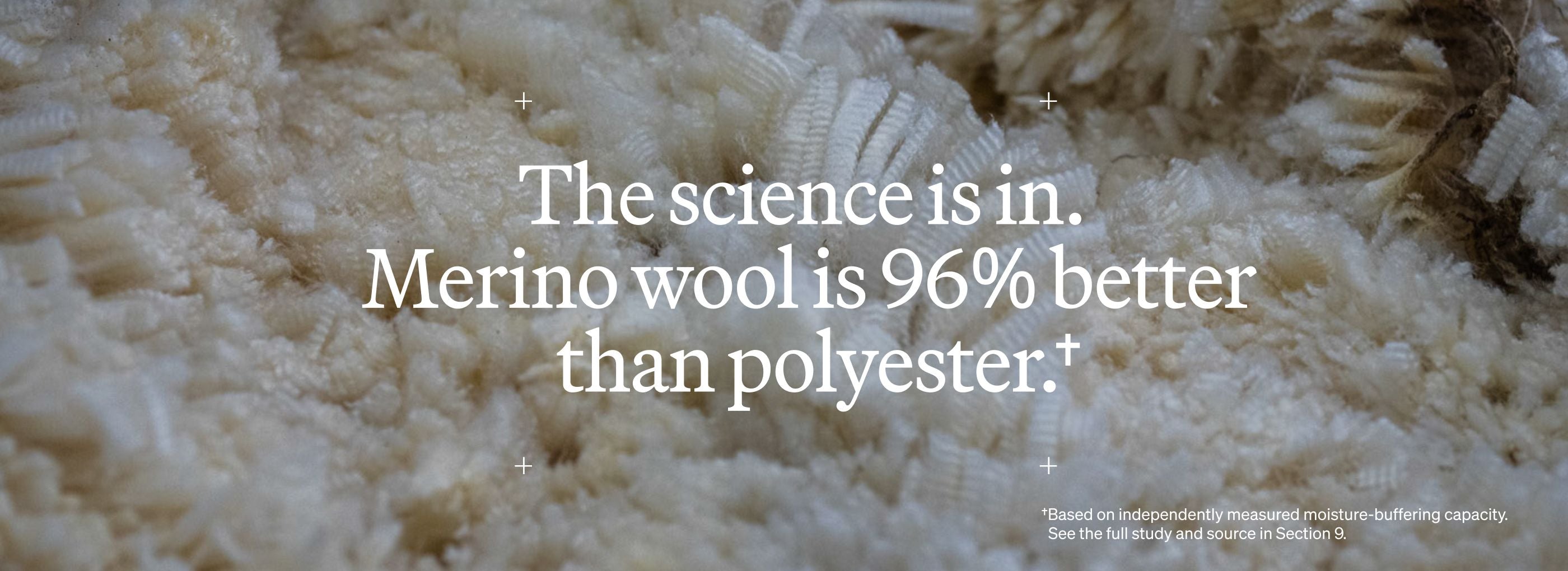
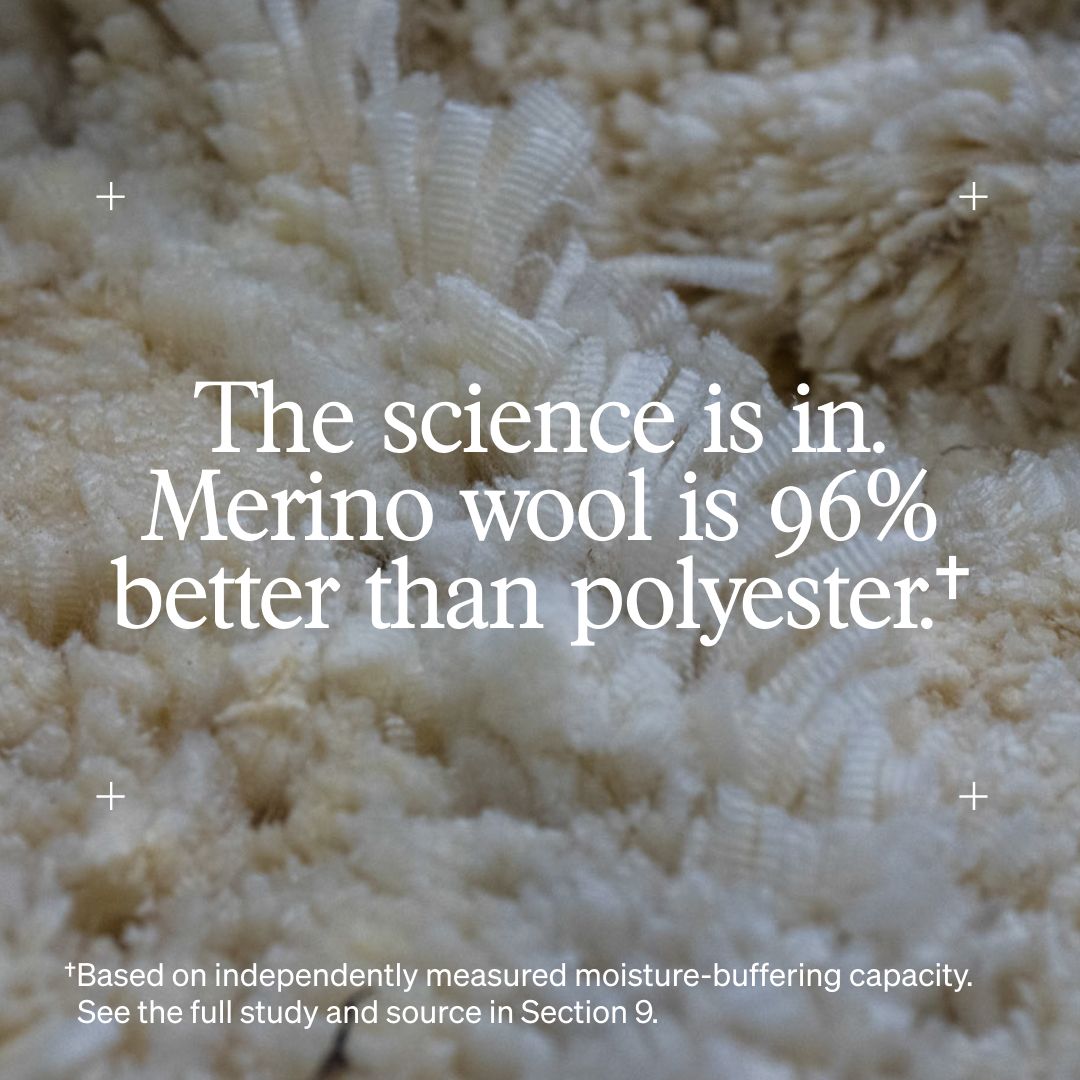
Merino wool buffers moisture 96% better than polyester.
Research shows that Merino wool buffers moisture 96% better than polyester, 45% better than cotton, and 26% better than viscose.
What is moisture buffering? Moisture buffering is a material’s ability to absorb, store, and release water vapour from the skin’s microclimate to moderate humidity changes. That means when the climb heats up, Merino absorbs and releases the moisture (sweat) that forms on your skin, regulating your temperature. And when it comes to Merino wool vs polyester, that’s where Merino proved itself to be 96% better.



SECTION 3: THE STUDIES
What studies show about Merino wool.
The below studies put wool head-to-head with polyester, cotton and viscose in controlled lab and human trials. The goal of these studies was to test these fabrics dynamically: how they performed during activity, but also during the important post-activity phase, when the sweat chills typically set in in the real world.

STUDY 1
Moisture Buffering and Temp Regulation
THE STUDY: Researchers tested four fabrics: 100% Merino wool, 100% polyester, 100% cotton and 100% viscose, using a thermal manikin held at 35°C skin temperature. The surrounding humidity was then rapidly raised from 35% to 80% over 30 minutes – similar to how your skin’s microclimate reacts when you suddenly start sweating hard, like pushing through a steep
climb.
The test measured how much extra heat each fabric needed to keep the manikin’s skin temperature steady through the spike, which is a direct read on moisture buffering.
THE RESULT: Merino proved itself 96% better than polyester, 45% better than cotton, and 26% better than viscose at buffering a sudden moisture surge, absorbing and evening out the moisture vapour before it turned cold and clammy against the skin.

STUDY 2
Post-exercise chill (tested on fabric)
THE STUDY: Researchers ran samples of 100% Merino wool, 100% polyester, 100% cotton and 100% viscose through a 90-minute test cycle: a resting phase, a simulated high-output activity phase, then a rapid environmental shift to simulate stepping into the cold. This dynamic, sweat-guarded hot-plate method, developed at NC State, captures what static lab tests miss: how a fabric performs during the transition, not just in one fixed condition.
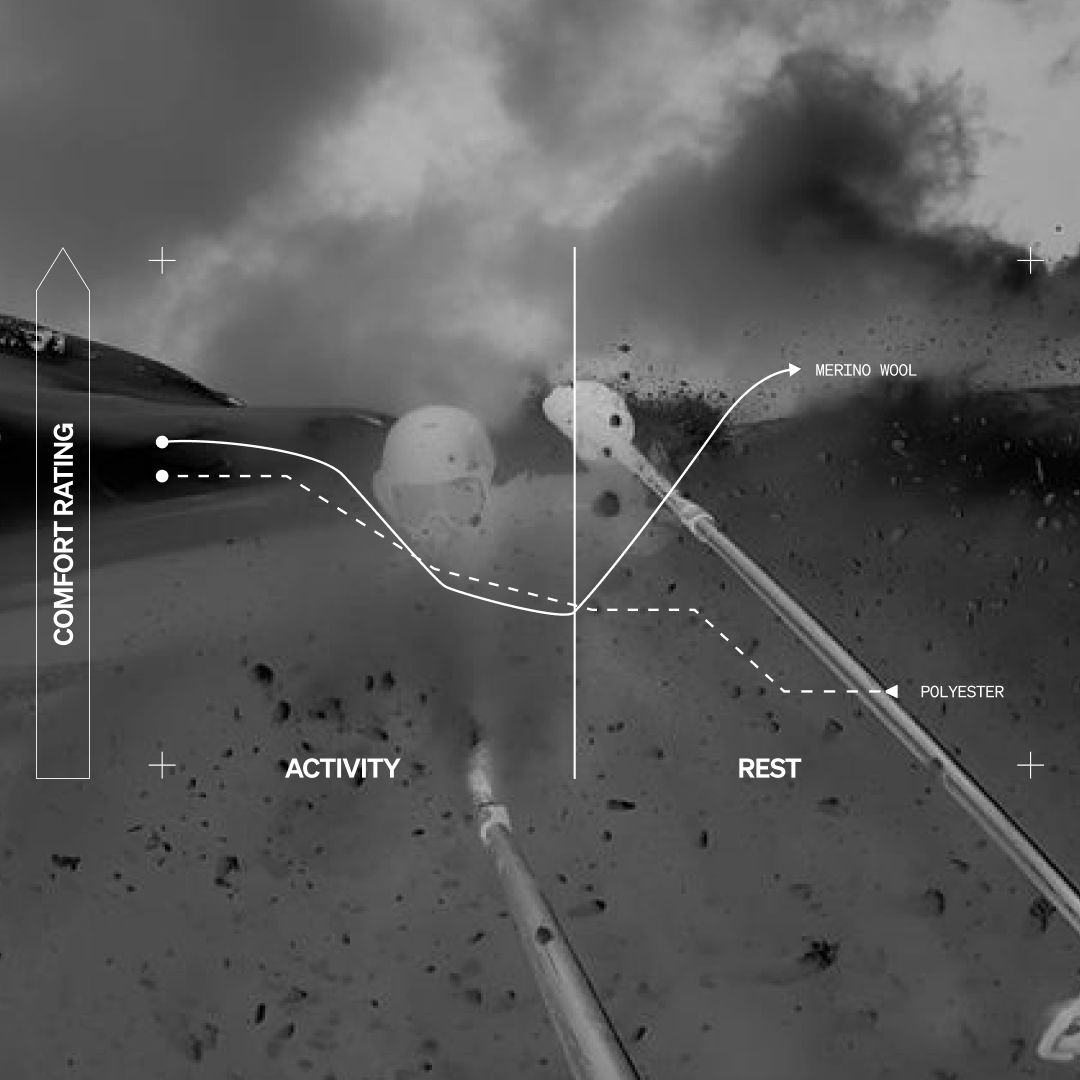
THE RESULT: Polyester shed heat fastest during the activity phase - useful while you're working hard, but with little left in reserve once you stop moving. Merino released heat at the lowest, steadiest rate of the four fabrics tested, carrying that stability through the transition from hard effort into rest.

STUDY 3
Post-exercise chill (tested on people)
THE STUDY: Twelve cyclists wore Merino, cotton, viscose, and polyester shirts during exercise in a controlled cold environment, followed by a rest period to mimic the post-exercise chill. These trials tested the kind of stop-go activity where material matters most in real life. Activities like skiing, biking, hiking, and trail running, where you're constantly moving between hard effort and standing still.
THE RESULT: Merino was rated significantly warmer and more comfortable than the other fabrics in the 25 minutes after exercise stopped. When the body typically loses heat and gets cold quick, Merino kept skin temperature warmer. It showed that Merino keeps working and regulating, even after you stop.
SECTION 4: THE SCIENCE OF ODOUR RESISTANCE
Is Merino wool odour resistant?
Yes, Merino wool naturally resists odour. Merino fibres are made of keratin, the same protein found in human hair. Keratin’s structure includes a hydrophobic outer layer that repels water (and the bacteria that thrive in damp conditions), and a hydrophilic inner core that can absorb 30-35% of its weight in moisture vapour without feeling wet. The result is less damp fabric sitting against your skin for odour-causing bacteria to thrive in. As proved by this study in 2022. For you, that means a t-shirt you can wear again and again between washes, even when you’re working hard or out in the hills.
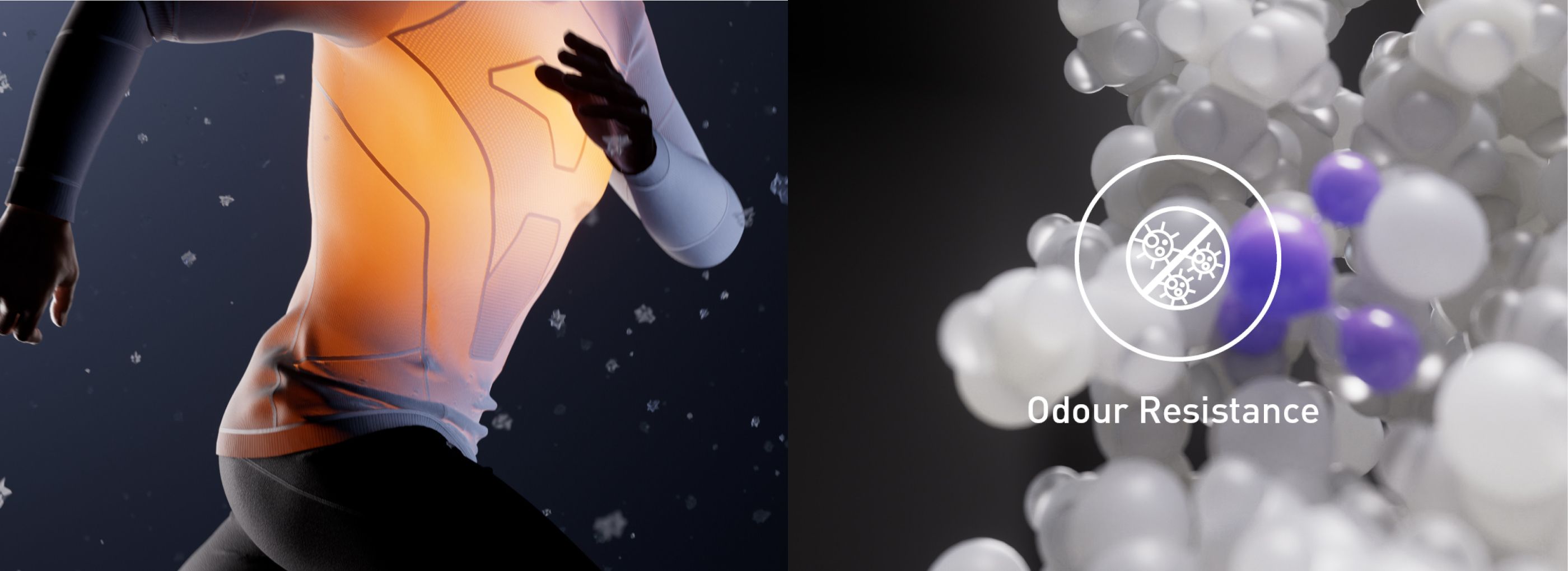
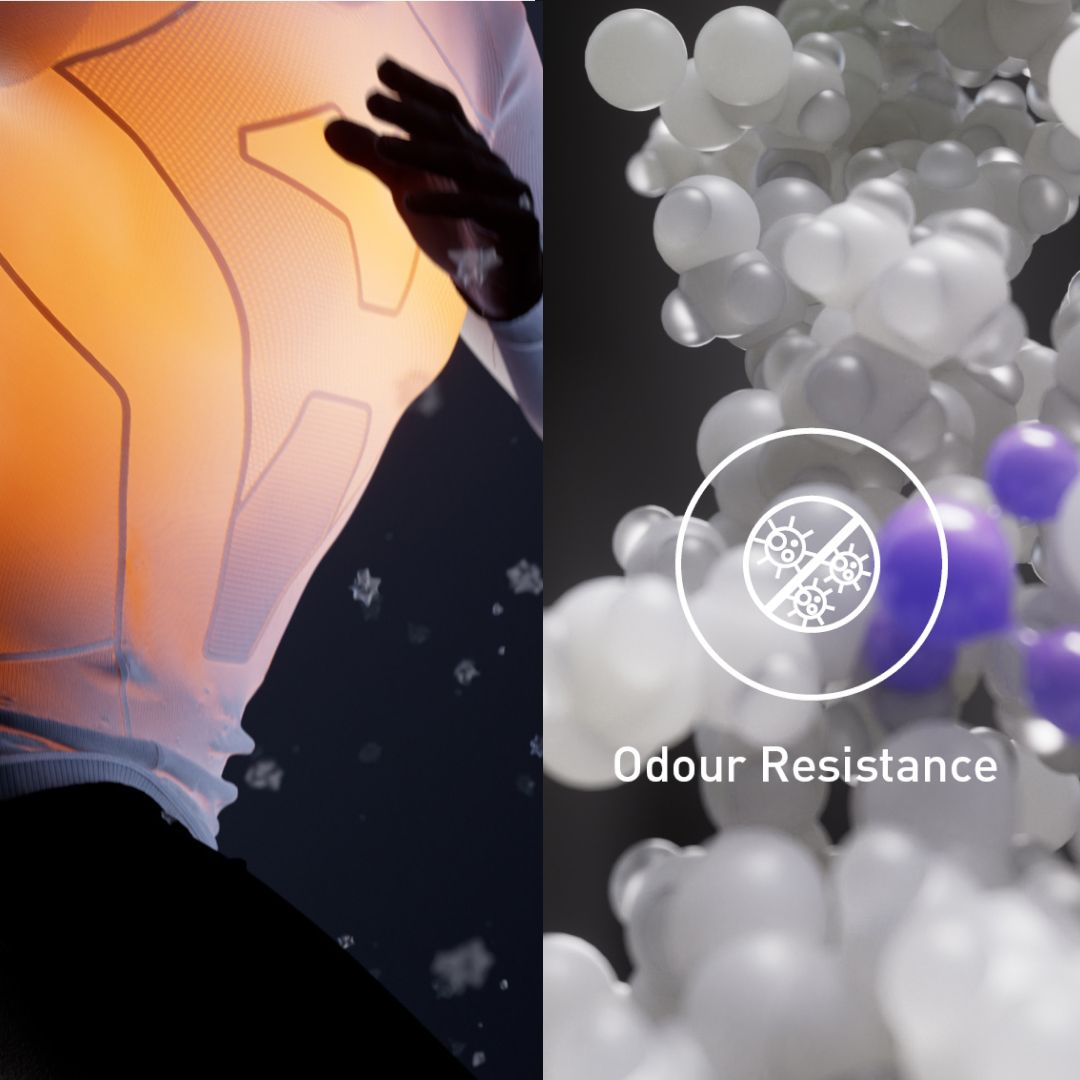


How does Merino compare to polyester in terms of odour? Researchers in this study tested how wool, cotton and nylon absorb two odour-causing compounds, acetic acid and ammonia, and wool came out on top for both. In wearer trials from the University of Otago, participants who wore wool, cotton, and polyester fabrics over multiple days rated polyester as significantly more odorous than wool, supported by lower bacterial counts on the wool fabric itself.
SECTION 5: THE VERDICT
So, is Merino wool better than synthetic overall?
For sustained, stop-go effort, the data says yes on thermal comfort, moisture management, and odour control. Synthetics might wick well and keep you cool when you’re working, but Merino wool has the tested edge when it comes to regulating your temperature, especially during recovery once you stop moving. Throw in its natural resistance to odour, and Merino wool becomes the ideal choice for action and adventure sports: in the cold, in the heat, and everywhere in between.




SECTION 6: DO YOUR HOMEWORK
The Merino research
Don’t (just) take our word for it. Here’s where the findings on this page are backed up.
- A New Approach to Demonstrate the Exothermic Behavior of Textiles by Using a Thermal Manikin — Abedin & DenHartog, Polymer Testing — the thermal manikin methodology behind the exothermic (heat-releasing) behaviour of Merino wool as it absorbs moisture.
- Discover Wool's Dynamic Breathability for Sport — The Woolmark Company's summary of the four-year North Carolina State University research programme, including the 96% / 45% / 26% moisture-buffering comparison against polyester, cotton and viscose.
- Advancing Moisture Management in Activewear: A Novel Dynamic Testing Approach for Dynamic Breathability of Sportswear — Abedin & DenHartog, Textile Research Journal (2025) — the peer-reviewed methodology behind the 90-minute dynamic fabric test described in Section 3.
- Clothing Impact on Post-Exercise Comfort: Skin-Clothing Physiology in Transient Environment — Abedin & DenHartog, Ergonomics — human-trial data on post-exercise comfort and after-chill.
- The Exothermic Effects of Textile Fibers during Changes in Environmental Humidity — Abedin & DenHartog, Fibers (MDPI) — fibre-level data on heat release during humidity shifts, underpinning the moisture-buffering comparison above.
- The Link Between Wool and Odour Resistance — International Wool Textile Organisation, summarising independent research into wool's natural odour resistance.
- Antibacterial Properties of Non-Modified Wool, Determined and Discussed in Relation to ISO 20645:2004 Standard — Ivanković, Rajic, Ercegovic Razic, Rolland du Roscoat & Skenderi, Molecules, 27(6), 1876 (2022) — found bacteria bind strongly to wool fibres and lift away with the fabric, referenced in Section 4.
- The Adsorption Kinetics and Mechanism of Odorous Gases onto Textile Fibers — Bai, Yu, Liu, Pakdel, Tang, Su, Hurren, Liu, Wang & Wang, RSC Sustainability, 1(2), 357–367 (2023) — wool vs cotton vs nylon odour-adsorption data, referenced in Section 4.
- Odor Intensity in Apparel Fabrics and the Link with Bacterial Populations — McQueen, Laing, Brooks & Niven, Textile Research Journal, 77(7), 449–456 (2007) — University of Otago wearer trial comparing wool, cotton and polyester, referenced in Section 4.
LEARN MORE

Merino Performance
We believe Merino wool is the world’s greatest performance fibre. It’s nature’s choice: built for the elements, designed to perform in extreme temps, and tested on mountain sheep in all conditions.

Our Story
Sometime back in the early noughties, a storm-chasing Kiwi living out of a ski bag realised his gear wasn't cutting it for both mountain missions and post-shred hangs. And here we are, almost two decades later.

Transparency
We’re trying not to f*ck the planet. Here’s how we’re doing that, and what we’re working on to ensure quality, transparency, and better quality standards across our growers, supply chain and production line.


